
- Teacher: Vojtěch Bahenský
- Teacher: Tomáš Kučera
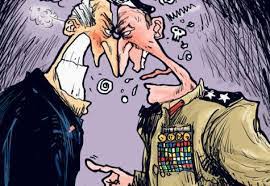
This course introduces students to the field of civil–military relations (CMR), a central theme in security studies and political science. While armed forces are often treated as neutral instruments of defence policy, this course problematises such a view by examining the armed forces as political, social, and normative actors. It addresses how the boundaries between the military, political authorities, and society are drawn, contested, and transformed. The course explores a wide range of issues: the military profession and its organisation, systems of recruitment and conscription, the role of ethnicity and citizenship in shaping armed forces, the use of the military in domestic politics, civilian control institutions, the role of militaries in revolutions, and the causes and dynamics of military coups.
Teaching is based on three complementary pillars. First, students develop their own research projects, which allow them to engage with scholarly debates and practise data collection and analysis. Second, seminar discussions provide space for critical engagement with key concepts and literature, linking classical scholarship to contemporary debates. Third, the course includes a simulation exercise in which students experience the dilemmas of civil–military interactions during moments of political crisis.
By the end of the course, students will be able to:
• understand the principal theoretical and normative approaches to CMR,
• explain the complexity of relations between armed forces, political leaders, and society,
• analyse contemporary civil–military issues in a comparative perspective,
• design and carry out a small research project, including data collection, analysis, and academic reporting.
Teaching is based on three complementary pillars. First, students develop their own research projects, which allow them to engage with scholarly debates and practise data collection and analysis. Second, seminar discussions provide space for critical engagement with key concepts and literature, linking classical scholarship to contemporary debates. Third, the course includes a simulation exercise in which students experience the dilemmas of civil–military interactions during moments of political crisis.
By the end of the course, students will be able to:
• understand the principal theoretical and normative approaches to CMR,
• explain the complexity of relations between armed forces, political leaders, and society,
• analyse contemporary civil–military issues in a comparative perspective,
• design and carry out a small research project, including data collection, analysis, and academic reporting.
- Teacher: Tomáš Kučera