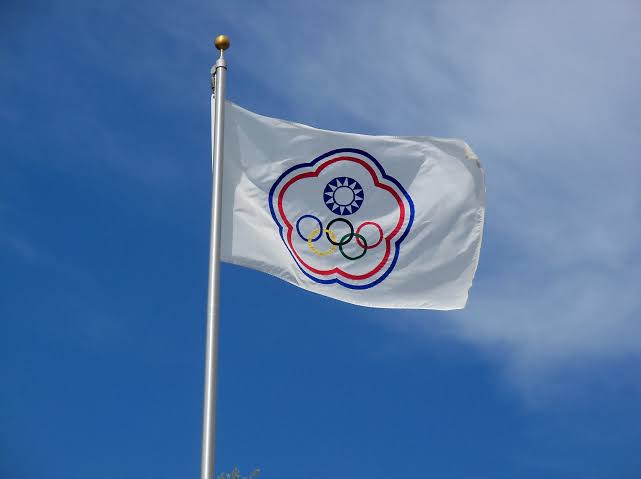
Can you name all the political powers that have had a colonial presence on Taiwan? Why do Taiwanese today look favorably at the Japanese colonial period, when most other places in Asia have a very negative view of that time? How do Taiwanese deal with the ever-looming possibility of war across the Taiwan Strait? Is there a distinctly Taiwanese (national) culture?
In this introductory class to Taiwan, we will be exploring questions like these. Located at the edge of empires, Taiwan has a unique colonial history that connects Asia, Europe, and North America. We will delve into history from the vantage of contemporary Taiwan, which is both post-colonial and democratic, and investigate what role the colonial experience plays in nation-building today. With this complex historical backdrop, the class will then focus on new, maritime as well as landed perspectives on Taiwan that have the potential of moving the island and its inhabitants out of the orbit of empire.
The class will be held in English. No prior knowledge of Taiwan is required, but I expect an interest in challenging your own biases and assumptions and a willingness to participate actively and to read about one or two academic articles or chapters per week in preparation (typically not more than 30 pages), in addition to engaging with more pop-cultural content.
- Teacher: Jacob Friedemann Tischer

In this class, we will discuss sex and gender relations in Taiwan from different disciplinary perspectives. A mere 50 years ago, Taiwan was viewed as a predominantly rural society imbued with conservative, patriarchal values. Today, it is the first country in Asia to legally recognize same-sex marriage and has a higher representation of women in parliament than any European country outside of the Nordics. How did this rapid change come about? And does Taiwan defying global trends towards more conservative values make it a haven for gender equality? After first engaging developments in the 20th and 21st centuries in a longitudinal, historical manner, we will then focus on a variety of current issues, including where sex and gender intersect with other identities and positionalities, such as class and nationality. The course is reserved for MA students; please contact me in advance if you’d like to participate but are not an MA student. While I target students with prior knowledge of Taiwan, comparative perspectives are healthy and most welcome. Participation without any background in Taiwan studies is thus possible if you’re willing to dig into the Taiwanese case studies.
- Teacher: Jacob Friedemann Tischer

How can a divinity be god and ghost at the same time?
What has made pilgrimages nation-building practices?
Why do politicians conduct rituals at local temple festivals?
Why does Taiwanese Buddhism spread globally, and how does this phenomenon relate to the dynamics of Chinese/Taiwanese identity at home?
Is all religion necessarily political?
These are some of the questions we explore in this class. Geographically and culturally located at the “interface of empires” (Wu 2020), Taiwan has for centuries been a site of cultural and political interaction but also a meeting place for different religious traditions. We will go from local religion to the national level, then the global and back. Ethnographic studies of local (communal or popular) religion give us a lens on traditional as well as modern Taiwanese society, including practices of devotion that still animate ways of relating with the divine today. In the second half of the class, we will turn to forms of organized religion that are globally oriented, such as Buddhism and Daoism. Adopting a framework invested in studying religion as it is practiced and experienced in everyday life, we focus on organized religions to understand how they a) interact with local traditions and b) shape (and are being shaped by) modern society. That is, we investigate interactions between different religious traditions but also between religion and politics. Specific localities feature centrally here as sites where traditions and practices meet and give rise to new social forms.
The class will mix lectures with seminar style. It is not an introductory class to Taiwan or religion. Participants do not necessarily need prior knowledge of either but are expected to read approximately two articles or chapters per week (c. 50 pages in English).
Image source: https://eng.taiwan.net.tw/m1.aspx?sNo=0029044.
- Teacher: Jacob Friedemann Tischer